There are are lot of things to worry about when deciding whether to have scoliosis surgery. Some are huge and used to keep me awake at 4am. Others are perhaps a little less life changing but still occupied my mind. One of these was how much flexibility I’d lose and whether I’d still be able to move normally. How would everyday activities feel: driving, swimming, sitting at my desk, picking something up off the floor, squirming under the coffee table to switch the TV on (a key skill in our house)? Would I be walking around, stiff as a board, looking like a robot? And most importantly of all, to me anyway, what would it feel like to practice yoga? I appreciate this isn’t life and death but yoga had played such a big part in my life, the thought of having a limited practice and perhaps not being able to engage in a mainstream class troubled me. I was starting to weigh up the benefits of surgery versus the everyday challenges of a long fusion and a less flexible spine.
So alongside the research into the operation more generally, I also did some digging on what my yoga practice might look like post surgery. I looked up yoga teachers with a spinal fusion (there’s a few of us out there!) and found Julie Wilkins at alignment paths. Lots of reading and a few emails later I felt a mixture of relief and inspiration. Julie was reassuring, emphasising that a full yoga practice was entirely possible with a few adjustments and thoughtful modifications. The more I thought about it, I came to realise that in recent years my practice had morphed a lot anyway. I’d already moved away from ashtanga and other dynamic forms of yoga to a gentler, slower practice focusing on lengthening and strengthening my spine. Backbends and deep twists are not necessarily that great for severe scoliosis (though I had been doing them in my twenties). I realised that many of the modifications I’d already introduced with the help of some different teachers would also work well with a fused spine.
So what’s the most effective yoga practice after scoliosis surgery?
Firstly, it’s important to check with your surgeon when it’s safe to return to exercise. Everyone’s situation and recovery process is a little different so discuss your exercise plans with those who’ve been involved with your care and take their advice. I mainly started with walking and swimming. I then introduced a few restorative postures and gentle breathing practices. The recovery period after surgery is a great opportunity to develop a meditation practice: no bending or twisting required! You can do it however feels comfortable for you; lying down, sitting or even at a gentle walking pace.
About a year after surgery I slowly started to return to a more physical practice. I tried out a few things to see what felt comfortable – and what didn’t. Having developed a yoga practice for many years before surgery meant that I had learnt to read my body to some extent, though this is always a work in progress. The postures accessible to you will depend on your body, the part of the spine that’s fused and how long it is i.e.; the number of vertebrae fused together. The challenge with a spinal fusion is supporting the unfused vertebrae, especially the ones just above and below the fusion site. I’m fused T1 – L2 so in my case L3 and C7 are bearing the brunt of the work. Strengthening the muscles around these areas is key, as well as allowing them to unfurl and decompress every day. Sitting down for long periods means the three unfused vertebrae in my lumbar spine can feel the strain so postures to release the lower back help me enormously.
Neutral spine postures that don’t ask your spine to bend or twist too much will be the foundation of your practice. As with unfused scoliosis, movements that help lengthen the upper body (front and back) and strengthen the long muscles either side of the spine become even more important once you’re fused.
I use a mix of the following postures in a typical practice – these won’t necessarily work for everyone with a fusion but most of them keep your spine in a neutral position or require only a small range of movement. Have a play and see what works for you.
Centering:
- constructive rest with hands on belly,
- sitting or kneeling with hands on lap (palms upwards)
- legs up the wall with head and upper body on floor and/or lower back on folded blanket (a modified viparita karani)
Warm-ups and openers:
- knees into chest (apanasana)
- gentle lying twist with knees separated
- extended child’s pose (with lateral sweeps to open the ribs)
- reclining hand to big toe pose – with a belt (supta padangusthasana)
Key poses (these all build strength)
- four stick pose (alternate arms and leg raises to build strength)
- bridge (setu bandha sarvangasana)
- locust (salabhasana) – this will depend on your fusion. I can only come up a couple of inches but it still works my back muscles.
- plank (phalakasana)
- warrior I and II (virabhadrasana I and II)
- chair (utkatasana)
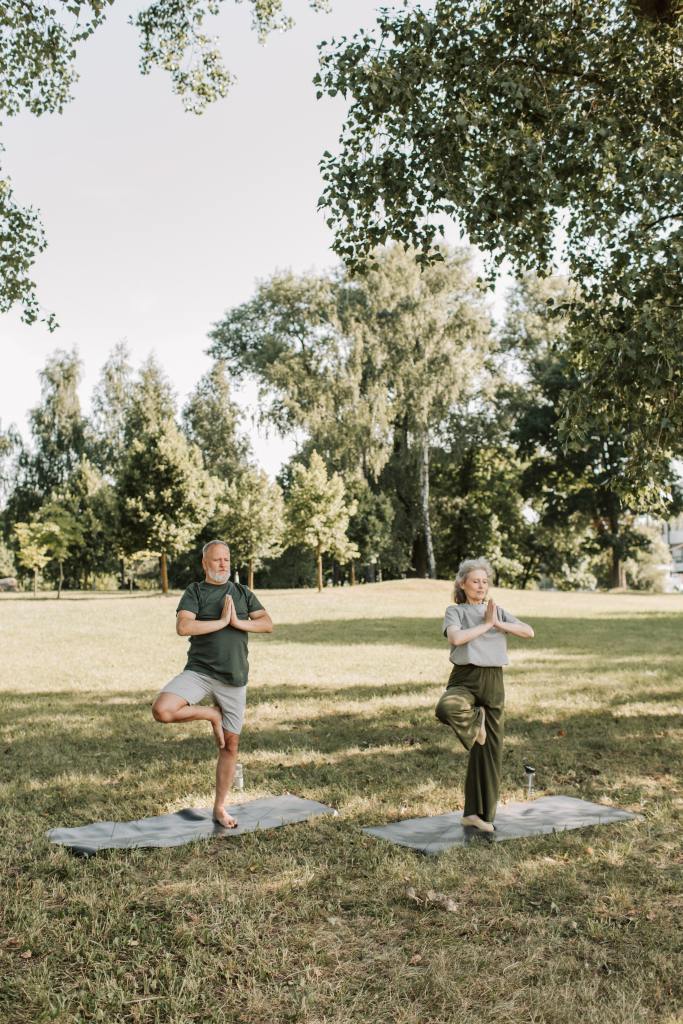
- tree (vrksasana)
Pranayama (breathing practice)
- alternate nostril breathing (nadi shodhana)
Relaxation – a long one! (savasana)
- lying down with legs stretched out or over a bolster / blanket
- lying down on front over a bolster. I find this is a good way of releasing tension in the upper back.
To be honest, seven years on I’m still progressing. I have a deeper practice now than before my surgery! I make more time for rest, meditation and pranayama. It’s so important for those of us with scoliosis and fused spines to rest our bodies and breathe deeply.
Take care x

 yogacurve.co.uk